
From Traditional SDLC to AI Agentic SDLC
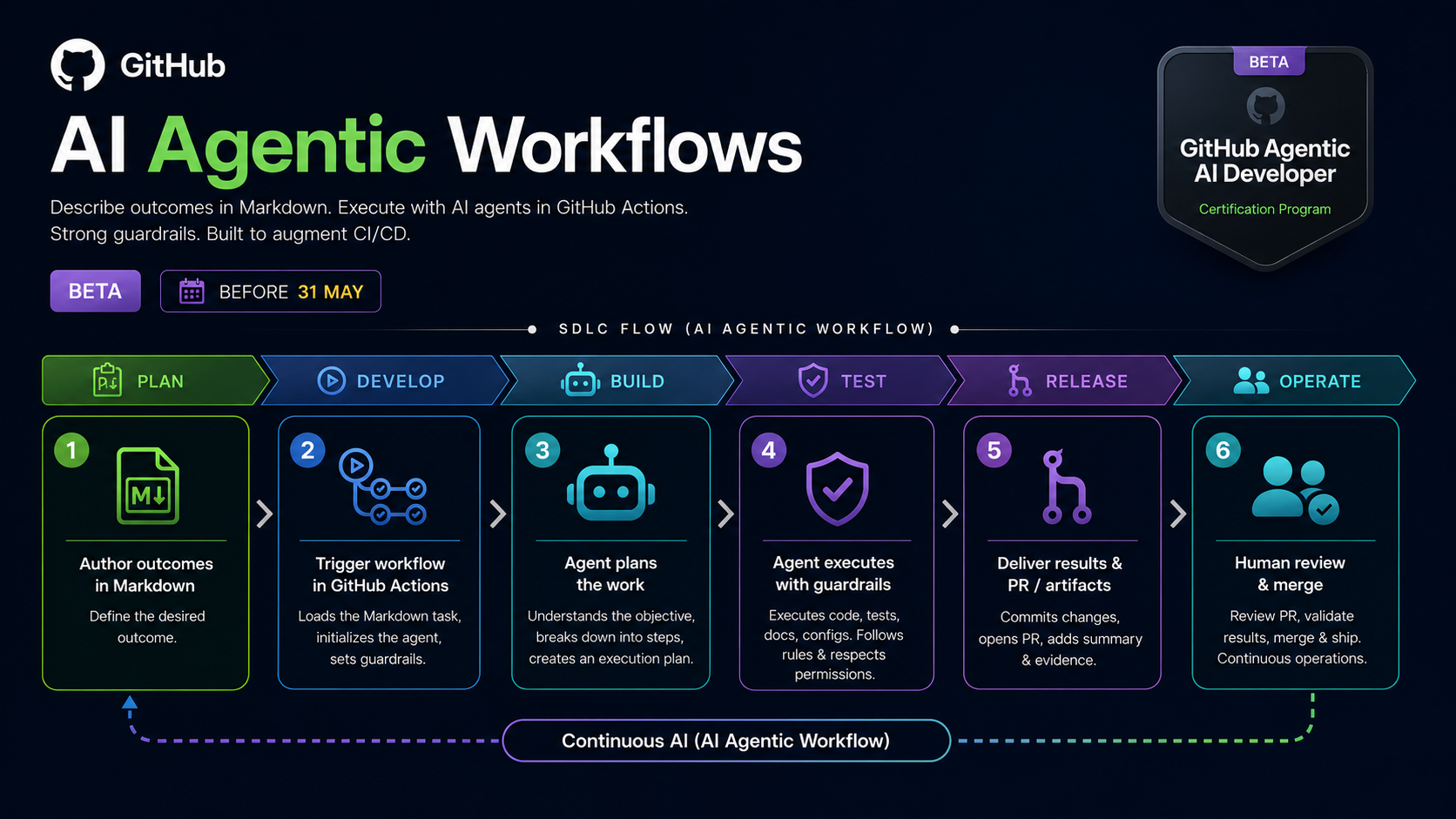
Update: July 31, 2026
I am pleased to share that I have now earned the GitHub Certified: Agentic AI Developer certification.
This achievement completes the certification journey described in this original post and reflects the knowledge and practical understanding I developed while preparing for the GH-600 beta exam.
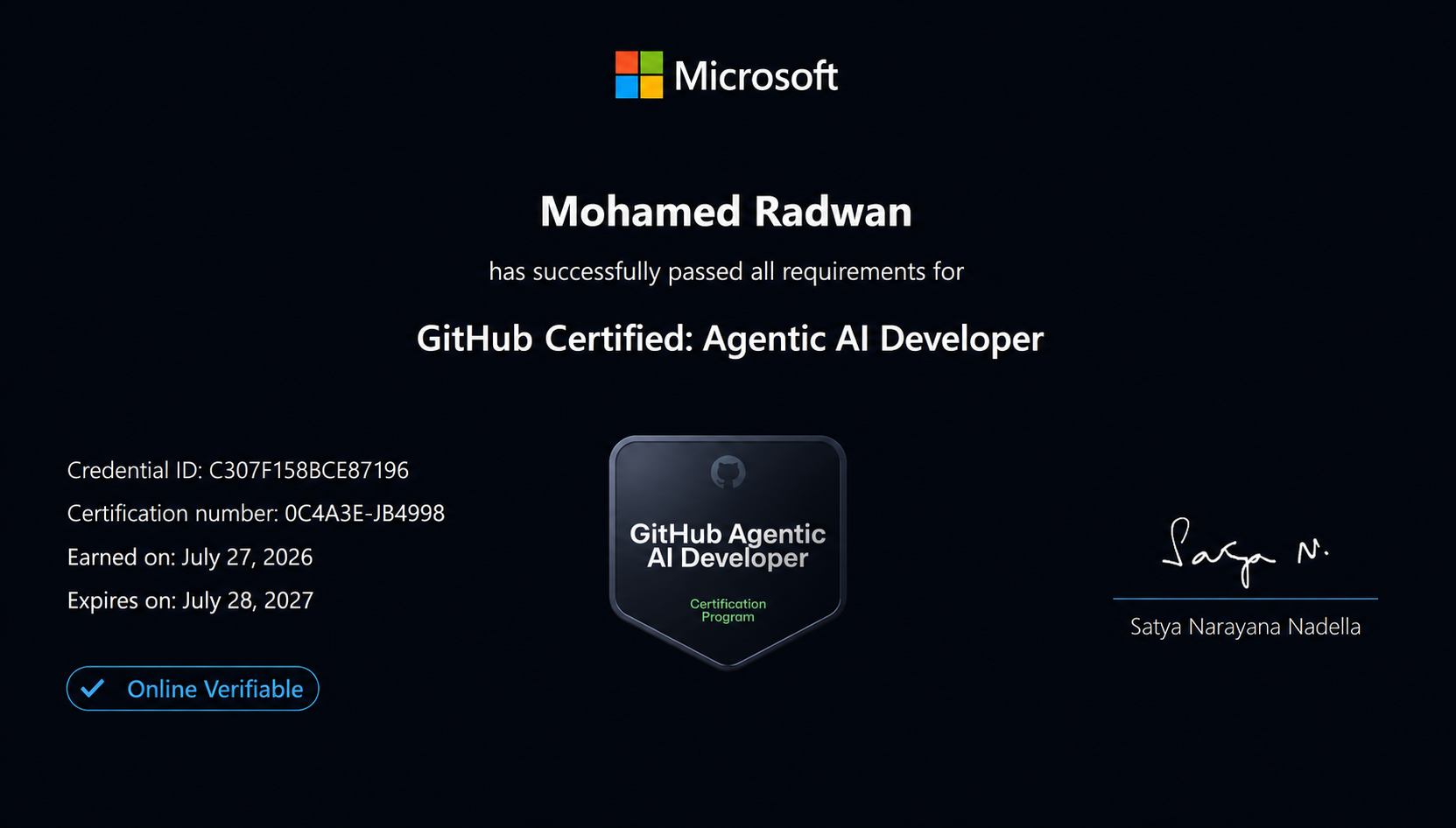
GitHub recently announced a new certification: GitHub Certified: Agentic AI Developer, also known as GH-600.
The certification is currently in beta, which makes it especially interesting. It is not only another GitHub exam. It represents an early signal of where software development is moving: from using AI as an assistant for isolated tasks, to designing agentic workflows where AI agents can participate across the software development lifecycle.
The topic matters more than the badge itself.
AI agentic development is about giving AI agents a structured role inside real engineering workflows. Instead of only asking AI to generate code, teams now need to think about how agents plan, use tools, interact with repositories, execute tasks, produce changes, and stay within clear boundaries.
This is where the shift becomes important.
Traditional SDLC is still the foundation. Planning, coding, testing, reviewing, deploying, monitoring, and improving software still matter. But AI agents are starting to add a new layer across those stages.
The real question is no longer only:
How can AI help me write code faster?
A more important question is:
How can AI agents safely participate in the software development lifecycle?
That is why I find GH-600 worth attention. Not just because it is a new certification, but because the topic behind it is becoming a serious part of modern software engineering.
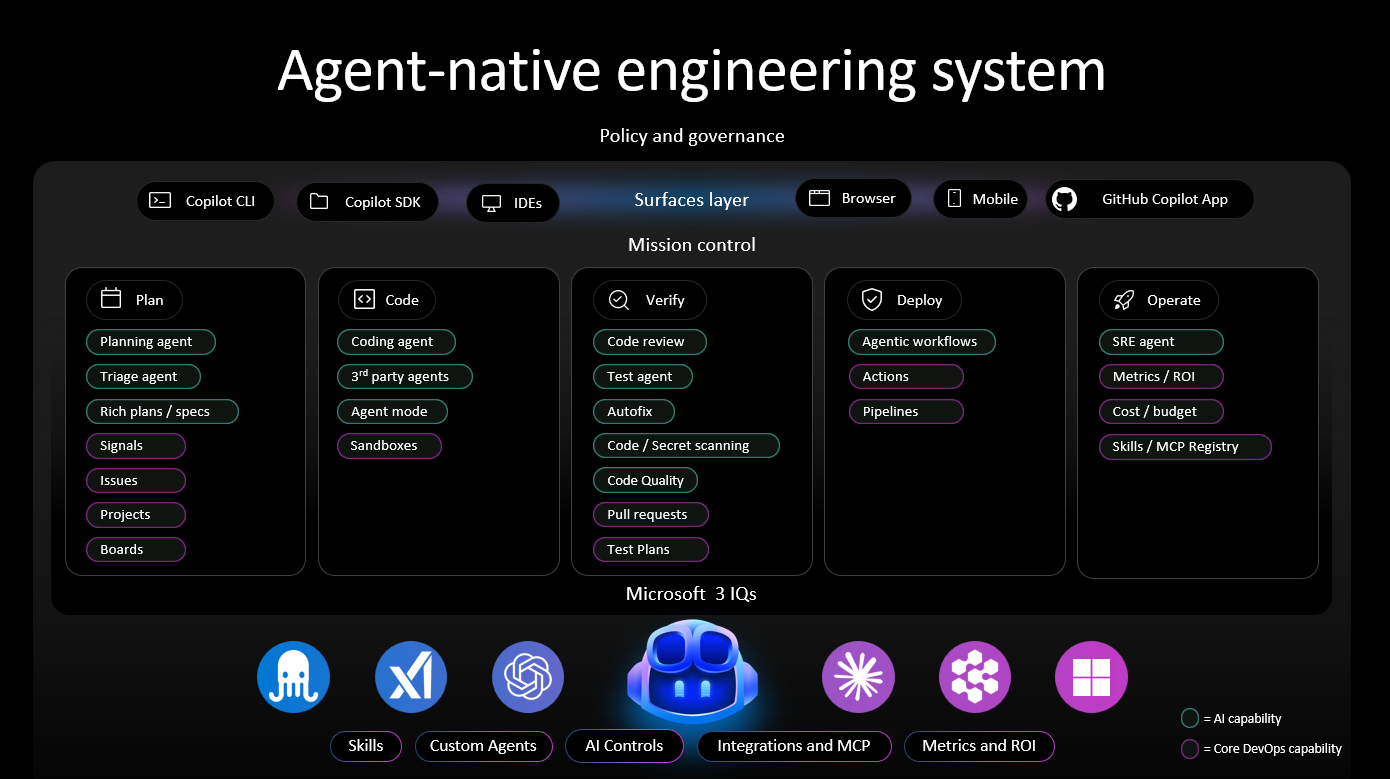
Agent-Native Engineering System
This view helps explain why agentic AI is bigger than code generation. It shows how agents can connect with planning, coding, verification, deployment, operations, governance, tools, metrics, and developer surfaces inside one engineering system.
How Agentic AI Extends and Augments the SDLC
Traditional SDLC is usually built around clear human ownership. A team plans the work, developers implement it, reviewers check it, pipelines validate it, and operations teams monitor production after release.
AI Agentic SDLC does not replace that structure. It adds a new agentic layer to it.
In this layer, AI agents can support work across the lifecycle. They can help understand repository context, break down work, interact with tools, prepare changes, support reviews, analyze failures, and help improve delivery workflows.
But the important point is not only automation.
The important point is controlled participation.
If AI agents are going to work inside real software development environments, teams need to define what agents can do, what tools they can use, what permissions they have, what outputs they must produce, and where human review is required.
This changes the developer role in a practical way.
The developer is still responsible for the outcome, but the work becomes less about manually performing every step and more about designing reliable workflows where AI agents can contribute safely.
That requires skills such as:
- Defining the agent’s task and expected output
- Setting execution boundaries
- Connecting the agent to the right tools
- Controlling access and permissions
- Reviewing and validating outputs
- Evaluating reliability and quality
- Managing risk and governance
- Keeping human judgment in the right places
This is why the topic behind GH-600 matters.
It is not only about learning a new GitHub certification. It is about understanding how agentic AI can become part of real SDLC workflows without losing control, reviewability, or accountability.
Why GH-600 Matters
GH-600 matters because it focuses on the topic behind the certification: how agentic AI can be deployed, operated, integrated, supervised, and governed inside production SDLC workflows.
That focus is important because agentic AI development is not only about writing better prompts or generating code faster.
It is about understanding how AI agents can work inside real engineering systems while still being controlled, reviewed, evaluated, and governed.
A developer working with AI agents needs to think about questions such as:
What should the agent be allowed to do?
What should require human approval?
How do we know the agent completed the task correctly?
What happens if the agent uses the wrong tool or misunderstands the context?
How do we preserve traceability and accountability?
These questions become important when agents start interacting with repositories, branches, pull requests, workflows, tools, and environments.
That is why governance is not separate from agentic development.
It becomes part of how software is built, delivered, and improved.
Why I Joined the Beta
I joined the GH-600 beta because I want to be involved early in this new direction of software development.
For me, the value is not only being certified early in the market. The bigger value is building deeper knowledge and practical experience while the topic is still emerging, especially by understanding how these principles can be implemented in real SDLC workflows.
Beta exams are usually harder to prepare for because the material is still limited, community experience is still new, and there are fewer ready-made preparation resources.
But that is also part of the benefit.
It pushes me to study the official objectives more carefully, connect the concepts myself, and understand the topic beyond exam memorization.
I see GH-600 as a structured way to learn how AI agents can be designed, integrated, supervised, evaluated, and governed inside real engineering environments.
What GH-600 Covers
GH-600 is focused on the practical skills needed to work with agentic AI inside software development workflows.
The Microsoft Learn path covers how to design, deploy, and manage agentic AI systems within the software development lifecycle. The official study guide also connects the exam to areas such as agent architecture, tool use, memory and state, evaluation, multi-agent coordination, governance, guardrails, and operations.
The topics include:
- Integrating AI agents into SDLC workflows
- Defining agent tasks, inputs, outputs, and execution boundaries
- Designing agent architecture and integration patterns
- Separating planning, reasoning, and execution
- Configuring tool use, MCP, and execution environments
- Managing memory, state, and evaluation
- Understanding multi-agent systems and orchestration
- Applying governance, guardrails, and operational controls
These topics show that agentic AI development is not only about making an AI model respond to a prompt.
It is about building systems where AI agents can work with structure, safety, permissions, reviewability, and accountability.
The Beta Opportunity
One useful part of GH-600 is the beta opportunity.
The first 100 people who take Exam GH-600 beta on or before May 31, 2026 can get 80% off the market price using the public discount code GH600Flanders, subject to availability and first-come, first-served conditions.
For anyone already interested in agentic AI development, the beta is a good opportunity to start early, study the topic while it is still emerging, and build practical understanding before the certification becomes more established.
There is also a Microsoft Reactor livestream titled:
The Agentic AI Developer: Deep Dive into the GitHub GH-600 Certification
The session is scheduled for May 28, 2026, 7:00 PM - 8:00 PM UTC.
It focuses on the exam roadmap, the official study guide, and preparation for the beta exam period.
How I Am Preparing
Because GH-600 is still in beta, I am preparing from the official sources first.
My current preparation is based on:
- GitHub Certified: Agentic AI Developer Certification
- Official GH-600 Study Guide
- GitHub Learn Certification Details for GitHub Agentic AI Developer
- Developing in Agentic AI Systems Part 1 of 2
- Microsoft Learn Agents Hub
- Foundations of Agentic AI
- Design Agent Architecture and Integration
- Agent Tooling, MCP, and Execution Environments
- Memory, State, and Evaluation
- Multi-Agent Systems and Orchestration
- Governance, Guardrails, and Operations
- Microsoft Reactor Session: The Agentic AI Developer Deep Dive into the GitHub GH-600 Certification
I am also building a GitHub repository and study material for people who are interested in this certification.
The goal is not to create a shortcut or collect random links.
The goal is to make the preparation clearer, especially because the certification is still new and many people are trying to understand what to study and how the topics connect.
Why This Matters Beyond the Exam
For me, the value of GH-600 is not only the certification.
The bigger value is the mindset behind the topic.
Agentic AI is changing how we think about software delivery. The key question is no longer only:
How can AI help me write code faster?
A more important question is:
How can AI agents safely participate in the software development lifecycle?
That question requires a wider understanding of architecture, permissions, tool use, execution environments, evaluation, governance, security, and human oversight.
These areas will become increasingly important as AI agents move from experiments into real engineering workflows.
This is why developers, DevOps engineers, platform engineers, solution architects, and technical leaders should pay attention to this direction.
Not because every team will immediately change how it works.
But because the skill set is starting to change.
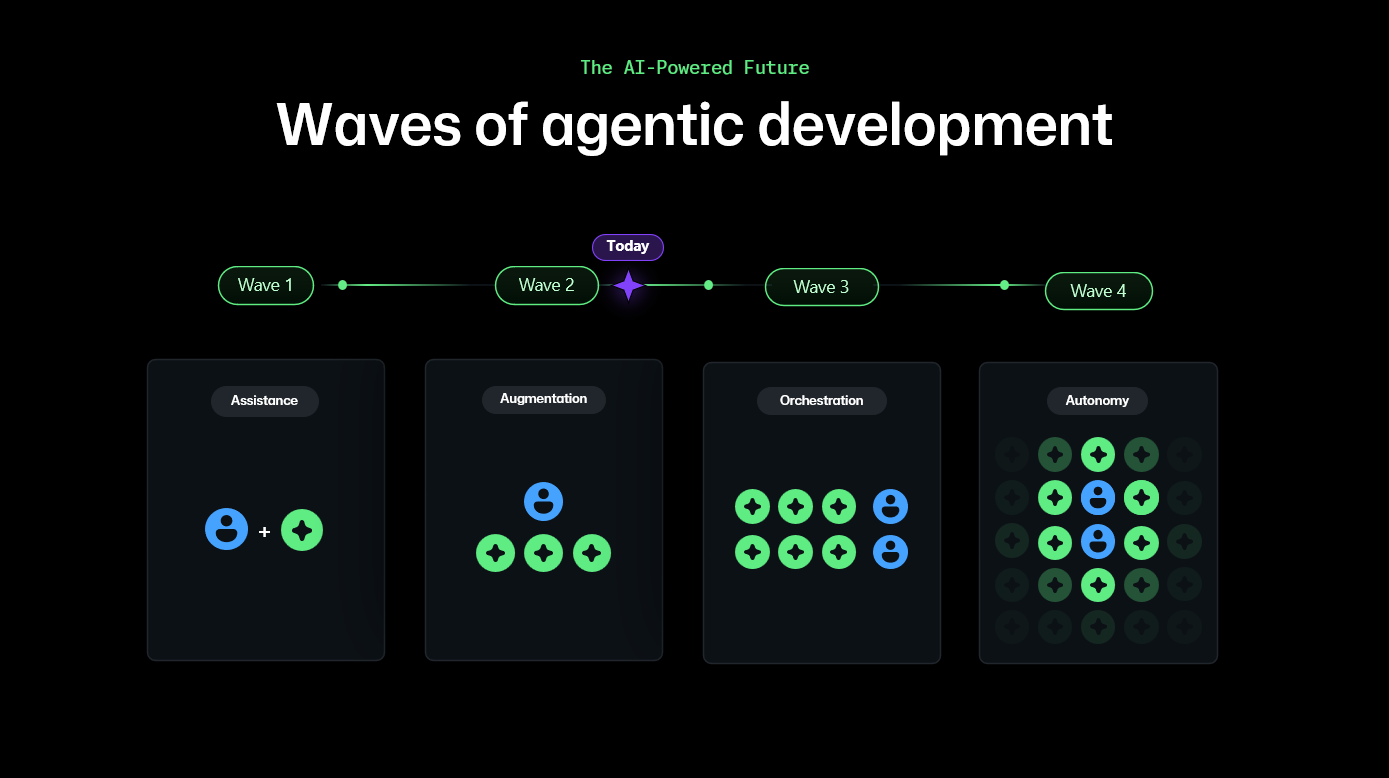
Agentic AI SDLC Responsibilities
This view connects the idea to real SDLC ownership. It shows how agentic workflows can support planning, coding, review, testing, deployment, monitoring, and improvement while keeping governance, evidence, and human responsibility visible.
Learning in Public
One of the things I like about certification preparation is turning the learning journey into something useful for others. I did this before with GitHub Copilot preparation, and I want to follow the same approach with GH-600.
This time, the topic is still early, which makes learning in public even more useful. Many people are still trying to understand what agentic AI development means, how the exam topics connect, and how to prepare from official resources.
I am planning to share what I learn while preparing for GH-600, including:
- Structured notes
- Exam objective mapping
- Study resources
- Practical examples
- A GitHub repository
- A possible live session for people interested in preparing together
If you are interested in the GitHub Agentic AI Developer certification, or if you are trying to understand the shift from traditional SDLC to AI Agentic SDLC, let me know. This will help me plan the material and the session in a way that is actually useful for the community.
Final Thought
GH-600 is important because it reflects a practical shift in software development, but the bigger point is the topic behind it: agentic AI inside the SDLC.
Traditional SDLC is still the foundation. AI agents are adding a new layer to how work can be planned, executed, reviewed, validated, and governed.
The next stage of software development will need developers who can do more than use AI tools. It will need people who understand how to design, supervise, evaluate, and govern AI agents inside real development workflows.
That is why I joined the GH-600 beta. Not only to prepare for a certification, but to understand this direction early and build practical depth while the field is still taking shape.